
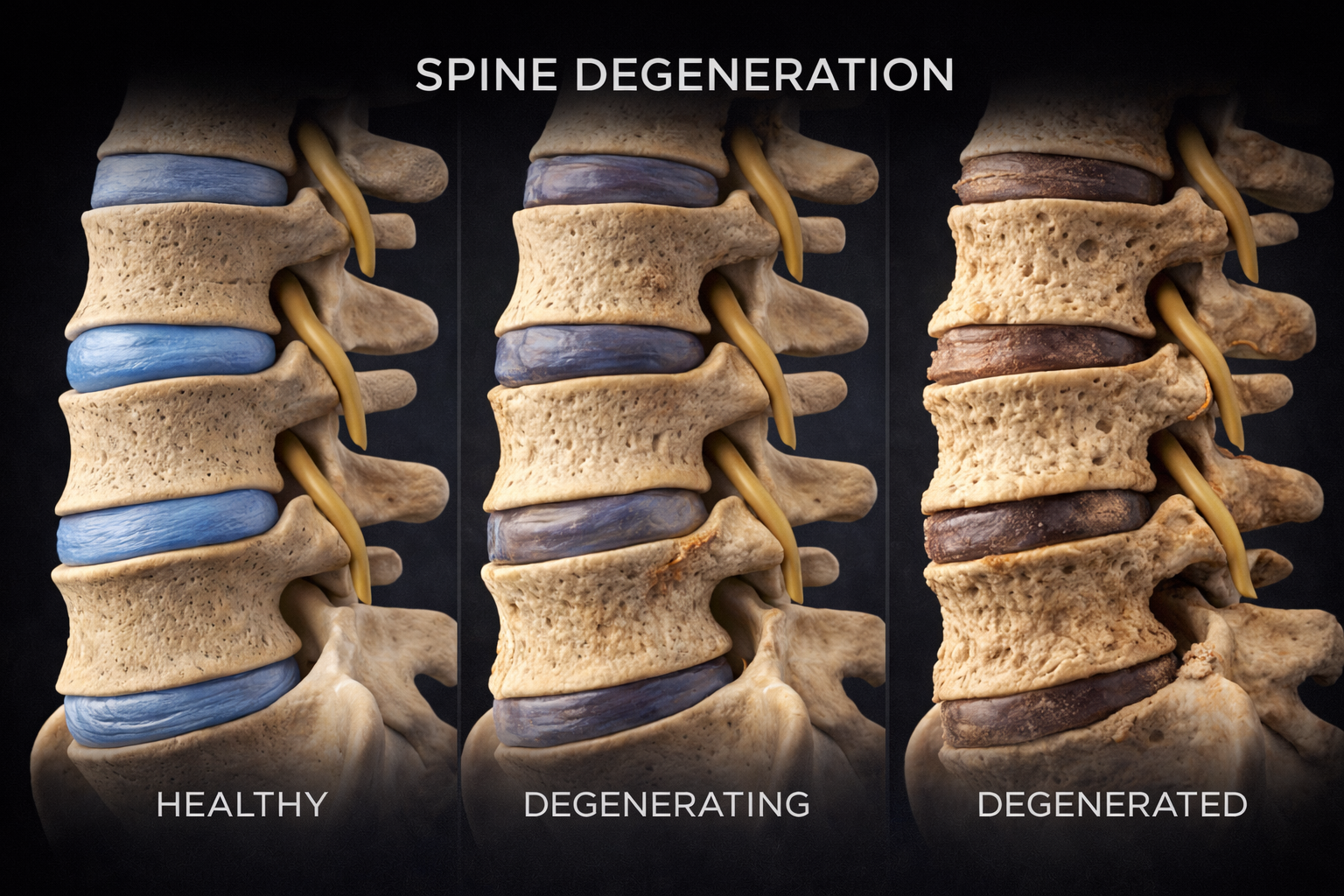
Spinal Degeneration & Osteoarthritis (Degenerative Disc / Joint Changes)
Spinal degeneration, often referred to as osteoarthritis of the spine, describes gradual, age-related changes in the discs and joints that allow the spine to move. Over time, intervertebral discs can lose hydration and height, and the small joints of the spine (facet joints) may develop arthritic changes. These processes are common and part of normal aging, though they don’t always cause pain.
Degenerative changes can alter how forces are distributed through the spine. As discs and joints stiffen, nearby muscles and tissues may work harder to support movement, sometimes leading to stiffness, discomfort, or reduced mobility.
Common symptoms
Symptoms vary widely and often fluctuate:
Stiffness, especially in the morning or after inactivity
Localized neck or back pain
Reduced flexibility or range of motion
Aching with prolonged sitting, standing, or repetitive activity
Occasional nerve-related symptoms if surrounding structures become irritated
Many people have degenerative findings on imaging without symptoms.
Why degeneration occurs
Spinal degeneration is influenced by several factors:
Normal aging and tissue wear
Reduced disc hydration over time
Repetitive stress or poor movement mechanics
Prior injury
Genetics, activity level, and overall tissue health
How degeneration affects movement
As spinal joints become stiffer or less tolerant to load, the body often compensates by changing posture or movement strategies. These compensations can increase strain on muscles, ligaments, and adjacent joints, contributing to fatigue, stiffness, and movement inefficiency.
How it’s evaluated
Evaluation focuses on function, not just imaging:
Movement and posture assessment
Joint mobility and muscular control
Neurological screening when needed
Imaging findings of “degeneration” are common and must be interpreted alongside symptoms and physical exam results.
Treatment approach
Care is typically conservative and movement-focused:
Education on activity modification and load management
Manual therapy to improve joint motion and reduce stiffness
Targeted exercise to support joint health and stability
Strategies to improve posture and movement efficiency
The goal is to maintain mobility, manage symptoms, and support long-term spinal function—not simply to “fix” imaging findings.